Choosing the right number placement is one of the most important details when designing a custom baseball uniform. A player's number should be easy to see, simple to identify, and positioned where it remains visible during movement. Although front and back numbers are the most common choices, teams can also use sleeves and other areas depending on their design, league rules, and uniform style.
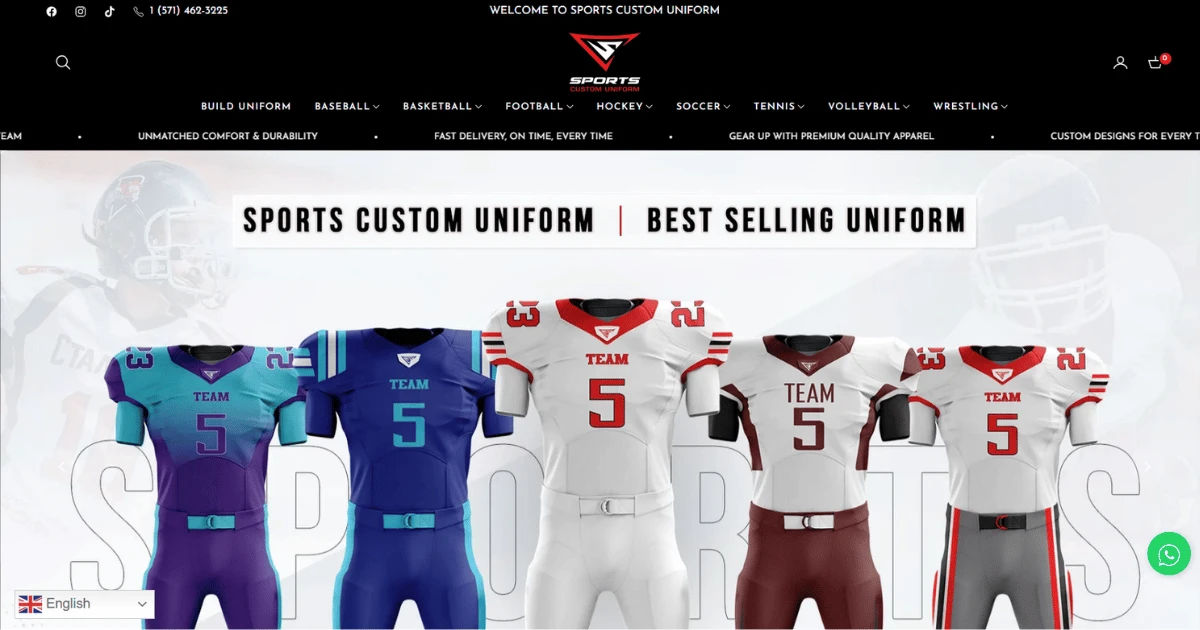
A well-positioned number does more than identify a player. It contributes to the overall appearance of the team and helps create a consistent visual identity. Poor placement, excessive decoration, or numbers that are too small can make an otherwise attractive uniform difficult to read.
When planning a custom baseball uniform, teams should consider several factors, including the size of the numbers, their location, jersey construction, player movement, and the amount of space available for logos and names. The goal is to create a balanced design that looks professional from both close and distant views.
Why Number Placement Matters
Baseball is a fast-moving sport. Players run, slide, throw, swing, and change positions constantly. Because of this movement, numbers need to remain visible from different angles.
Coaches, officials, teammates, spectators, photographers, and broadcasters may all need to identify players quickly. A properly placed number makes that process easier.
Number placement also affects the visual balance of a jersey. If a number is positioned too close to a logo, collar, sleeve seam, or other design element, the front of the uniform can look crowded.
A professional-looking uniform usually follows a clear hierarchy. The team name or primary logo receives attention, while the player's number remains prominent without overpowering the rest of the design.
Where Should the Main Number Go?
The back is traditionally the most important location for a baseball player's number. A large number placed between the shoulders and lower back provides excellent visibility.
The back number is generally centered horizontally across the jersey. It should have enough space around it so that the digits are easy to distinguish.
The exact vertical position can vary according to the jersey cut. In most cases, the number sits below the player's name or nameplate when a name is included.
A back number should also be large enough to remain readable when a player is standing several yards away. However, making it excessively large can interfere with seams, lettering, or other design details.
For many teams, the back is the first place to establish number sizing. Once the back number has been finalized, smaller numbers can be designed for other locations.
Front Number Placement
A front number is another popular feature of baseball jerseys. It is especially useful when spectators or officials are viewing a player from the front.
On a traditional baseball jersey, the number is often placed on the upper chest. It may appear on the left or right side rather than directly in the center.
A common approach is to place the number on the opposite side from the main team logo. This creates visual balance and prevents the front of the jersey from becoming overcrowded.
For example, if the team logo is positioned on the left chest, the number can be placed on the right chest. The arrangement creates two distinct visual points while leaving enough breathing room between them.
Some teams prefer a centered number, particularly when the jersey does not contain a large team name or logo. The best choice depends on the overall design.
Number Placement on the Sleeves
Sleeve numbers can provide another way to identify players. They are usually smaller than back or chest numbers and are often treated as a secondary design element.
A sleeve number may be placed on the upper portion of the sleeve, where it remains visible without interfering with the player's arm movement.
However, sleeve placement requires careful consideration. Baseball players frequently move their arms during pitching, batting, throwing, and fielding. A number positioned too close to a seam or cuff may become distorted or difficult to read.
Sleeve numbers are therefore best kept simple. Strong contrast and clean typography are usually more effective than complicated designs.
Should Numbers Appear on the Front and Back?
For many teams, using numbers on both the front and back provides the best combination of identification and appearance.
The back number can be larger because it has more available space. The front number can be smaller while still offering useful identification when a player is facing the audience.
A custom baseball uniform with front and back numbering also gives designers greater flexibility. The front can support a team logo, while the back can emphasize the player's identity.
Not every team needs both locations, though. Recreational teams may choose a back number only, while competitive programs may prefer numbers on both sides.
The decision should be based on league requirements, team preferences, and the desired appearance.
How Large Should Baseball Numbers Be?
Number size is just as important as number location. A perfectly positioned number can still fail if it is too small to read.
Back numbers should generally be significantly larger than front or sleeve numbers. This makes them visible from behind when players are spread across the field.
Front numbers can be smaller because viewers are often closer to the player and the front of the jersey usually contains other design elements.
The exact measurements can vary depending on the jersey manufacturer, league regulations, and available design space. Teams should always check applicable uniform rules before finalizing their artwork.
A good design should also account for different body sizes. A number that looks appropriate on a youth jersey may appear too small on an adult jersey.
Choosing the Right Number Font
Typography has a major effect on readability. Baseball numbers are often designed using bold, straightforward fonts with strong shapes.
Avoid fonts that make similar digits difficult to distinguish. Numbers such as 1, 3, 5, 6, 8, and 9 should remain recognizable even when viewed from a distance.
Traditional block lettering remains popular because it provides a strong athletic appearance. Modern teams may choose customized typography, but readability should always come first.
The font should also complement the team's branding. A vintage baseball team might use traditional lettering, while a modern program may select a cleaner athletic style.
Number Color and Contrast
A number needs strong contrast against the jersey fabric. This is particularly important when players are photographed or viewed under stadium lighting.
For example, dark numbers on a dark jersey can become difficult to read. Similarly, light numbers may disappear against a pale background.
Outlining can solve this problem. A number can have a contrasting border that separates it from the fabric underneath.
A custom baseball uniform should use consistent colors throughout the number design. If the team uses two or three primary colors, the number should fit naturally within that palette.
Teams should also consider how colors appear in photographs. A design that looks attractive on a computer screen may not have the same visual impact under outdoor lighting.
Number Placement and Player Names
When a player's name appears above the number, spacing becomes especially important.
The name should have enough room to remain readable without touching the number. If the two elements are too close together, the back of the jersey can look crowded.
The number should remain the dominant identification element. Names can use smaller lettering, allowing the number to stand out from a distance.
Some traditional baseball uniforms do not include player names at all. In those designs, the large back number can become the primary identification feature.
Teams should decide on the relationship between names and numbers before finalizing the uniform template.
Leave Space for Logos
Number placement should never be considered separately from the rest of the jersey design.
A baseball jersey may contain a team logo, wordmark, sponsor logo, league patch, player name, sleeve patch, and other elements. Every component needs sufficient space.
A number placed too close to a logo can create a cluttered appearance. Designers should establish a clear visual hierarchy before adding decorative elements.
For this reason, it is helpful to create a complete jersey mockup rather than approving numbers independently.
The front, back, and sleeves should be viewed together. This allows teams to identify spacing problems before production begins.
Consider Player Movement
Baseball uniforms need to work during real gameplay, not just in a digital mockup.
Players bend at the waist, rotate their torsos, swing bats, raise their arms, and slide across the field. These movements can stretch fabric and temporarily distort printed or sewn elements.
Numbers should therefore be positioned on relatively stable areas of the jersey whenever possible.
A number located directly over a heavily moving seam may become less readable. Designers should also consider whether buttons, piping, vents, or panels will interrupt the number.
A carefully planned custom baseball uniform accounts for these practical issues before production.
Printing or Embroidery?
The method used to apply the number can also influence its appearance.
Screen printing, heat transfer, sublimation, tackle twill, and embroidery are among the options available for sports uniforms. Each method creates a different look and has different performance characteristics.
Sublimation allows numbers to become part of the fabric design, making it possible to create detailed graphics without adding significant weight.
Tackle twill provides a classic athletic appearance and is often associated with traditional baseball uniforms. It can give numbers a layered, textured appearance.
Heat-applied numbers can provide clean and efficient customization, particularly for teams needing multiple player names and numbers.
The best method depends on the team's budget, desired appearance, expected durability, and uniform material.
Follow League Rules
Before choosing a final number position, teams should check their league's uniform regulations.
Different leagues, schools, tournaments, and organizations may have specific requirements concerning number size, placement, colors, and visibility.
Some competitions may require a number on the back and may specify minimum dimensions. Others may regulate where logos or sponsor marks can appear.
Following the rules from the beginning prevents costly redesigns and replacement orders.
If uniforms are being created for an official competition, league guidelines should always take priority over aesthetic preferences.
Common Number Placement Mistakes
One common mistake is making the back number too small. A number that looks attractive on a computer can become difficult to identify from the field.
Another problem is poor contrast. Even a large number will not work well if it blends into the jersey.
Crowding is another frequent issue. Teams sometimes try to include too many logos, names, patches, and decorative elements in limited space.
Inconsistent placement can also hurt the team's appearance. Every player's number should follow the same template and measurements.
Finally, teams sometimes approve designs without checking how they look on different jersey sizes. A layout should be tested across the actual size range before production.
Creating a Balanced Uniform Design
A successful custom baseball uniform combines identification, comfort, branding, and visual balance.
Start by deciding where the primary back number will go. Next, determine whether a front number is needed. After that, evaluate sleeve numbering and additional patches.
Keep the most important elements visually dominant. A player's number should be easy to locate without competing unnecessarily with the team name or logo.
Use consistent spacing throughout the design. The same rules should apply to every player, even when jersey sizes differ.
It is also useful to review the design from several distances. Look at it close up, then step back and determine whether the number remains readable.
Youth and Adult Uniform Considerations
Youth uniforms require special attention because smaller jerseys provide less space.
Large numbers can overwhelm a youth jersey, particularly when a team logo and player name are also included.
Adult jerseys offer more room, but the same principles apply. Numbers should remain proportional to the garment rather than simply being made as large as possible.
If a team has both youth and adult divisions, using a consistent design system can create a unified organization identity.
The proportions may change slightly between sizes, but the overall placement should remain recognizable.
How to Choose the Best Number Layout
Before production, create a digital mockup showing the entire uniform.
Check the front, back, both sleeves, and any pants or shorts numbering if applicable. Look for areas where elements overlap or appear unbalanced.
Ask several people to review the design. A coach may focus on league requirements, while players may notice comfort or movement concerns. A designer can focus on visual hierarchy and spacing.
This collaborative approach can reveal problems that one person might overlook.
A final proof should be approved before the order is submitted. Changes made after production begins can be expensive and time-consuming.
Practical Number Placement Guide
For most baseball teams, the following general approach works well:
-
Back: Use the largest and most prominent player number.
-
Upper chest: Add a smaller front number when desired or required.
-
Sleeve: Use a small number as an optional secondary identifier.
-
Name area: Keep the player name clearly separated from the back number.
-
Logo area: Leave enough space so logos and numbers do not compete.
-
Seams: Avoid placing important digits directly across seams or heavily flexible areas.
-
Color: Choose strong contrast between the number and jersey.
-
Sizing: Adjust proportions appropriately for youth and adult garments.
These principles provide a strong starting point, but league requirements and the specific jersey construction should always be considered.
Conclusion
Number placement may seem like a small detail, but it can have a major effect on the appearance and functionality of a baseball jersey. The back is usually the primary location because it offers the most space and visibility. Front numbers provide additional identification, while sleeve numbers can serve as a secondary design feature.
The best custom baseball uniform designs do not simply place numbers wherever there is empty space. They consider readability, movement, color contrast, typography, logos, player names, jersey sizes, and competition requirements.
A well-designed number should be immediately recognizable without making the jersey look crowded. It should remain visible during gameplay and complement the team's overall identity.
Before production, teams should review a complete mockup, confirm the applicable league rules, check measurements across different sizes, and make sure every player's number follows the same design system. Taking these steps can prevent common mistakes and produce a professional result.
Ultimately, the ideal number placement is the one that combines visibility, balance, and consistency. When these elements are planned carefully, the number becomes more than an identification mark—it becomes an important part of the team's visual identity and the finished uniform's professional appearance.
About the Author