Yes, wholesale personalized barber capes can show logos, and adding a professional logo is one of the most effective ways to turn an ordinary barber cape into a branded part of a barbershop’s customer experience. A cape can display a shop name, logo, initials, slogan, social media handle, or another simple design, depending on the customization method and material.
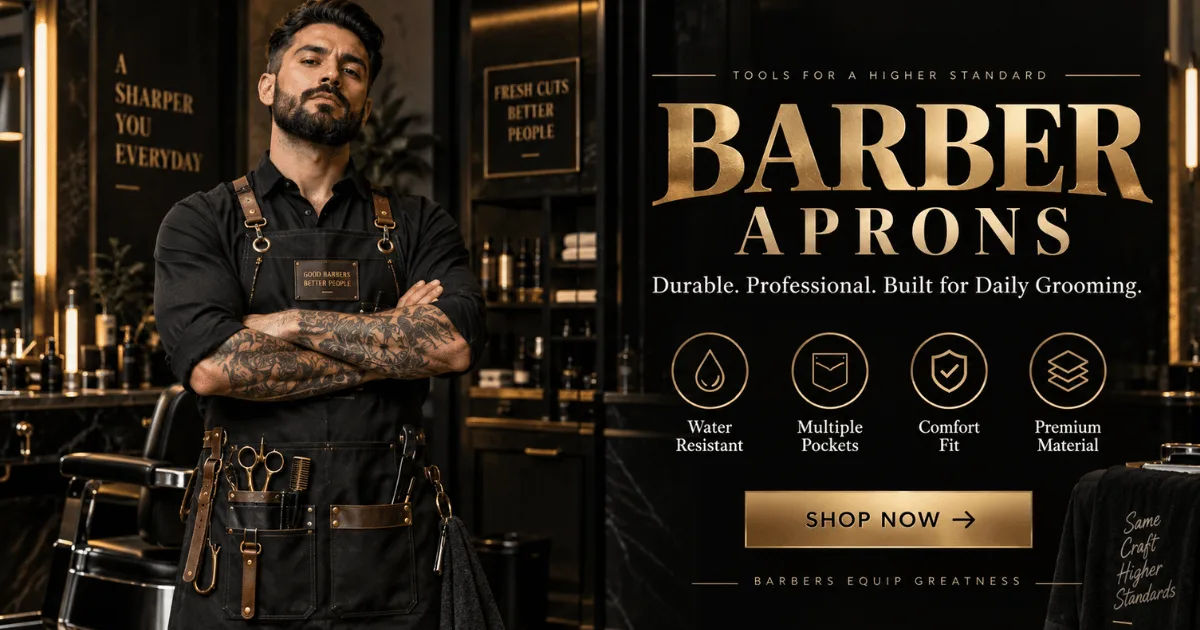
For barbershops, salons, grooming academies, and businesses ordering capes in larger quantities, logo customization can create a consistent appearance across the team. It also helps make the shop more recognizable when customers see branded capes in photos, videos, or social media posts.
However, getting a good result is not simply a matter of placing a logo on fabric. The size of the design, location, color combination, fabric type, printing or embroidery method, and cleaning requirements all affect how the finished cape looks and performs.
Why Put a Logo on a Barber Cape?
A barber cape is highly visible during almost every haircut or grooming service. This makes it a useful branding surface that does not require customers to look at a sign or business card.
A well-positioned logo can reinforce the identity of a barbershop without making the cape look overly promotional. The goal is usually to make the branding noticeable but still professional.
Creates a More Professional Appearance
Matching capes with a consistent logo can make a barbershop look organized and established. This can be especially useful when several barbers work in the same location.
Instead of using generic black or plain-colored capes, the business can create a coordinated look that matches its interior, signage, uniforms, or other branded materials.
Improves Brand Recognition
Customers may remember a distinctive logo more easily than a business name alone. When the same logo appears on capes, uniforms, appointment cards, and social media content, the visual identity becomes more consistent.
This can be valuable for shops that regularly post haircut transformations or barbering videos online.
Supports Social Media Branding
Barber shops often take photographs and videos while providing services. A branded cape can appear naturally in that content.
This means the logo may be visible in before-and-after photos, reels, tutorials, and promotional videos without requiring additional advertising space.
How Are Logos Added to Barber Capes?
There are several ways a logo can be applied to a cape. The best option depends on the fabric, design, order quantity, desired appearance, and budget.
Screen Printing
Screen printing is a familiar customization method that can work well for simple logos and bold designs.
Ink is applied to the fabric through a prepared screen. It can produce strong, visible graphics and is often practical for larger orders.
This method is generally more suitable for designs with relatively simple shapes and colors. Very detailed artwork may require a different approach.
Heat Transfer Printing
Heat transfer involves applying a printed or cut design to the cape using heat and pressure.
It can be useful for smaller designs, detailed graphics, and logos containing several colors. The finished appearance depends heavily on the quality of the transfer material and the application process.
For professional use, it is important to choose a transfer designed to withstand the cleaning process the cape will experience.
Embroidery
Embroidery creates a stitched logo rather than a printed one. It can give a cape a premium and durable appearance.
However, embroidery is not ideal for every barber cape. Thick stitching can add weight and stiffness to the fabric, and extremely detailed logos may not translate well into embroidery.
It is usually better for simple shop logos, initials, or text-based designs.
Sublimation
Sublimation printing can be suitable for certain synthetic fabrics, particularly polyester-based materials. The design becomes integrated into the fabric rather than sitting as a heavy layer on top.
This can create a smooth finish, although the process depends on the fabric composition and color. It is not equally suitable for every cape material.
Where Should the Logo Be Placed?
Logo placement can significantly change the appearance of the finished product. A logo that is too large or positioned awkwardly can make an otherwise professional cape look unbalanced.
Chest Area
The upper chest area is one of the most visible locations. A logo placed here can be seen clearly while the client is sitting in the barber chair.
This position works particularly well for a relatively compact shop logo.
Lower Front Area
A logo can also be placed lower on the front of the cape. This provides a larger visual area and can work well when the shop wants the branding to be visible in photographs.
The exact location should account for how the cape hangs on different customers.
Shoulder Area
A smaller logo near the shoulder can provide a more subtle branded appearance. This can be useful for shops that want customization without making the cape look like advertising material.
Back of the Cape
The back can provide a large branding area, particularly when customers are photographed from behind.
However, a large logo is not always necessary. A simple, well-designed mark may look more professional than a large block of text.
What Kind of Logos Work Best?
Not every logo translates equally well onto fabric. A design created for a website or business card may need modification before it is suitable for a barber cape.
Simple Logos Are Usually Better
Simple shapes, clear lettering, and strong contrast are generally easier to reproduce.
Tiny details can disappear when printed or stitched, especially if the logo is small.
If the original logo contains complicated gradients, very thin lines, or extremely small text, the manufacturer may recommend simplifying it.
Consider Logo Colors Carefully
The cape color should contrast with the logo.
For example, a light-colored logo may be easier to see on a dark cape, while darker artwork can work better on lighter fabric.
Businesses should also consider whether their existing brand colors will remain recognizable on the chosen cape material.
Can Personalized Capes Use More Than Just a Logo?
Yes. A business does not have to limit customization to its primary logo.
A cape could potentially include a shop name, initials, slogan, website, social media username, or other branding elements.
However, adding too much information can make the design cluttered. A barber cape is usually more effective as a clean branding element than as a full advertisement.
For most shops, a logo combined with a short business name is enough.
What Materials Work Best for Logo Customization?
The cape material matters because different fabrics respond differently to printing, heat, and stitching.
Common barber cape materials include polyester, nylon, and various water-resistant synthetic fabrics. The exact composition can affect which customization technique produces the best result.
A business ordering wholesale personalized barber capes should ask the supplier which decoration methods have been tested on the specific material.
This is particularly important when the capes will be washed frequently.
Will the Logo Survive Repeated Washing?
A properly applied logo should be designed with regular commercial use in mind, but no customization method should be assumed to last forever.
Barber capes can be exposed to hair products, water, disinfecting procedures, detergents, heat, and repeated folding. These conditions can gradually affect both the fabric and the logo.
The care instructions should therefore be considered before choosing a customization method.
Ask About Washing Requirements
Before placing a large order, ask the supplier how the customized capes should be washed and dried.
Some printed designs may require gentler washing or temperature limits. Embroidered designs may have different care considerations.
Following the manufacturer's recommendations can help preserve the appearance of the branding.
What Should You Check Before Ordering in Bulk?
Ordering in bulk can reduce the cost per cape, but it also means a mistake can affect dozens or hundreds of pieces.
For that reason, it is smart to evaluate a sample before approving a large production order.
Request a Sample
A physical sample can reveal details that are difficult to judge from a digital mockup.
Check the logo's size, position, sharpness, color, and overall appearance on the actual cape.
A design may look excellent on a computer screen but appear too small, too large, or poorly positioned once it is placed on a person.
Confirm the Logo File
Ask the supplier which file format they require. A high-resolution logo or vector artwork is generally preferable for professional reproduction.
If the logo has small text, request a proof before production.
Check Color Accuracy
Brand colors can vary between digital screens and physical materials. If exact branding is important, confirm how colors will be reproduced.
For some businesses, a slight color difference may not matter. For established brands with strict visual guidelines, it can be much more important.
Are Wholesale Personalized Barber Capes Worth It?
For many professional barbershops, personalized capes can be worthwhile because the branding serves a practical purpose while the cape is already being used.
The value becomes more noticeable when a shop has multiple barbers and wants all stations to have a consistent appearance.
Personalization can also help independent barbers create a recognizable identity. A distinctive logo on a cape can make photographs and videos look more polished.
However, customization should not come at the expense of comfort, fit, durability, or ease of cleaning. A cape still needs to perform its primary job: protecting the client from hair and grooming products.
How Much Logo Customization Is Too Much?
One common mistake is trying to include every piece of business information on one cape.
A logo, phone number, website, social media handle, slogan, and service list may technically fit, but that does not mean they should all be included.
Good branding usually depends on restraint.
A small logo in a strong position can communicate more effectively than a large design packed with information. Think of the cape as part of the shop's visual identity rather than a billboard.
Tips for Choosing Customized Barber Capes
When planning an order, start with the cape itself rather than the logo. Choose a material that is comfortable, protective, durable, and appropriate for regular barbering.
Then consider how the logo will interact with that material.
Think about where customers will see the branding. If most shop photographs show clients from the front, chest placement may make sense. If the shop frequently photographs finished haircuts from behind, a back logo could be more useful.
It is also worth considering the size of the order. A large wholesale order deserves more testing because replacing an entire batch can be expensive and inconvenient.
Finally, keep the design consistent with the rest of the business. Matching the cape logo with shop signage, uniforms, packaging, and online branding can create a much stronger professional impression.
Conclusion
Yes, wholesale personalized barber capes can absolutely show logos, and there are several ways to achieve a professional result. Screen printing, heat transfer, embroidery, and sublimation can all be useful depending on the cape material, logo design, expected durability, and budget.
The most important point is that logo customization should be planned alongside the cape's practical requirements. A beautiful logo does not help much if the cape is uncomfortable, difficult to clean, or poorly suited to everyday barbering.
For the best results, choose a durable cape material, use a clear and recognizable logo, select an appropriate customization method, and carefully consider the logo's size and placement. Requesting a sample before committing to a large order can also prevent costly mistakes.
When these details are handled properly, a branded barber cape becomes more than protective clothing. It becomes a subtle but effective part of the customer experience and gives the entire shop a more consistent, professional identity.
About the Author