Learning barbering is not just about understanding different hairstyles or knowing how to use professional equipment. It is a practical skill that requires patience, creativity, precision, and regular training. Many people interested in becoming professional barbers want to know whether training programs provide enough opportunities to develop their skills before entering the workplace. 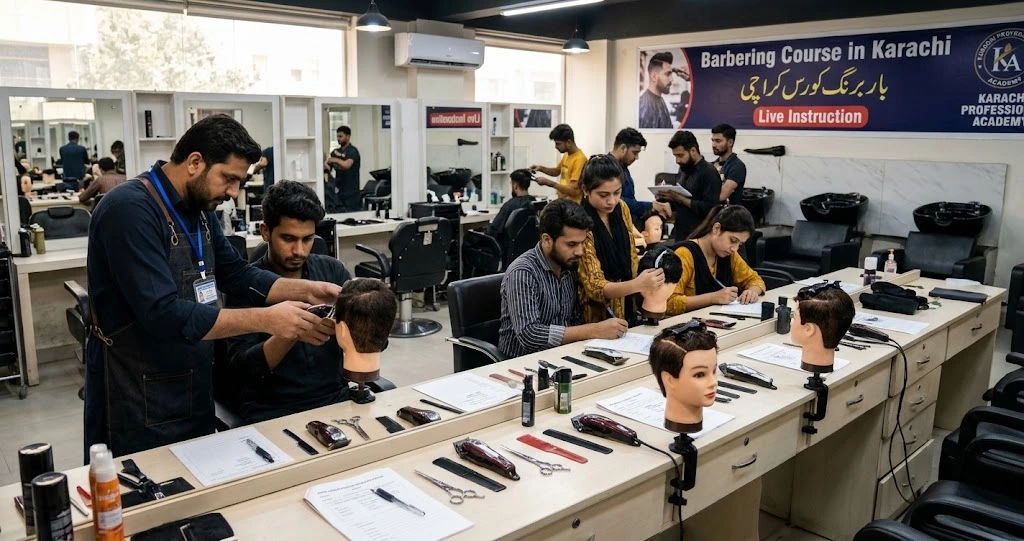 One of the most important questions beginners ask is whether a barbering course in Karachi includes practical training or focuses mainly on classroom lessons.
The simple answer is yes. Many professional barbering programs include practical sessions where students learn and perform different barbering techniques. However, the amount of hands-on training depends on the institute, course structure, available equipment, and experience of the instructors. Some programs offer demonstrations followed by supervised practice, while others provide more extensive training with real clients.
Understanding the practical side of barber education can help students choose a suitable program. This guide explains what practical training involves, which skills students can develop, how instructors supervise their work, and why hands-on experience is essential for building a successful barbering career.
Why Is Practical Training Important in Barbering?
Barbering is a profession that depends heavily on practical ability. Reading about haircuts or watching instructional videos can introduce students to different techniques, but these activities cannot replace actual experience.
Students need to understand how clippers feel in their hands, how scissors move through different hair textures, and how to create clean lines. These skills develop through repeated practice.
Practical training also helps beginners become comfortable using professional tools. At first, handling clippers, razors, and scissors may feel difficult. With regular guidance, students gradually improve their control and confidence.
Developing Professional Skills
Practical lessons allow students to develop essential barbering abilities, including:
-
Using professional hair clippers correctly.
-
Creating different haircut styles.
-
Performing fades and tapers.
-
Trimming and shaping beards.
-
Using scissors for detailed cutting.
-
Creating clean hairlines and edges.
-
Maintaining proper hygiene.
-
Communicating with customers.
Each skill requires a different level of attention and coordination. Practising regularly helps students understand how these techniques work together.
Building Confidence Through Experience
Beginners often feel nervous when attempting their first haircut. They may worry about cutting too much hair, creating uneven sections, or making mistakes.
Supervised practice provides a supportive learning environment. Students can improve their techniques without feeling pressured to perform perfectly from the beginning.
As they complete more exercises, they become familiar with different haircutting situations. This experience makes it easier to work confidently in a professional barbershop.
What Practical Activities Are Included in a Barbering Course in Karachi?
The practical activities offered by training institutes can differ. However, a well-organised program generally introduces students to basic techniques before moving towards advanced barbering skills.
A barbering course in Karachi may include demonstrations, individual exercises, mannequin practice, and supervised haircutting sessions.
The following are some common practical activities students may experience.
Hair Clipper Handling and Control
Learning to operate hair clippers is one of the first practical skills taught to beginners.
Students practise holding clippers correctly, selecting suitable guards, adjusting cutting angles, and controlling movement. They also learn how different clipper settings affect hair length.
Instructors may demonstrate how to use clippers for removing bulk hair, creating basic shapes, and blending different lengths.
With repeated exercises, students become more comfortable handling equipment and maintaining consistent results.
Learning Different Haircutting Techniques
Haircutting is a central part of professional barber education. Students learn how to create different styles according to customer preferences and hair types.
Common techniques include:
-
Basic short haircuts.
-
Crew cuts.
-
Buzz cuts.
-
Taper haircuts.
-
Skin fades.
-
Low fades.
-
Mid fades.
-
High fades.
-
Scissor-over-comb techniques.
Students usually begin with simpler techniques before attempting more complicated styles.
This gradual approach helps them understand the basic principles of haircutting and develop better control.
Practising Beard Trimming and Shaping
Professional barbers often provide beard grooming services alongside haircuts.
Practical lessons may teach students how to trim facial hair, maintain beard length, define cheek lines, and shape necklines.
They also learn how to use beard trimmers and scissors safely.
Understanding facial structure is important because beard styles should complement a customer's appearance. Students practise creating balanced shapes and maintaining neat edges.
Learning Razor Techniques
Razor handling is another important area of barbering education.
Students may learn how to prepare shaving products, hold a professional razor, stretch the skin safely, and follow appropriate shaving directions.
Training should emphasise hygiene, blade handling, and customer safety.
Beginners may first practise on suitable training materials before progressing to supervised shaving exercises where permitted.
Do Students Practise on Mannequins or Real Clients?
One common concern among beginners is whether they will practise on mannequins or real people.
The answer depends on the training institute and the stage of the program. Many schools introduce practical skills using mannequins before allowing students to work with real clients.
Both methods have important educational benefits.
Mannequin-Based Practice
Mannequin heads are useful for beginners because they provide a controlled learning environment.
Students can repeat haircutting exercises without worrying about making mistakes on a customer.
They can practise:
-
Basic cutting techniques.
-
Sectioning and hair control.
-
Scissor handling.
-
Clipper movements.
-
Blending different lengths.
-
Creating haircut shapes.
Mannequins are particularly helpful when students are learning basic hand movements.
However, mannequin hair does not always behave like natural human hair. Therefore, students eventually need experience with different real hair textures.
Supervised Practice on Real Clients
Some institutes provide opportunities to practise on real clients under instructor supervision.
This experience introduces students to situations they may encounter in professional barbershops.
For example, customers may have different hair lengths, growth patterns, facial structures, and personal preferences.
Students learn how to understand these requirements and adjust their techniques accordingly.
Real-client practice also develops communication skills. Barbers need to listen carefully, explain available options, and confirm the desired style before beginning a haircut.
How Do Instructors Guide Students During Practical Sessions?
Professional guidance plays an important role in barbering education.
Simply giving students equipment and asking them to practise is not enough. They need clear demonstrations, corrections, and feedback to improve their techniques.
A good instructor explains each procedure before allowing students to perform it independently.
Demonstrations of Professional Techniques
Instructors usually demonstrate techniques step by step.
For example, when teaching a fade haircut, they may explain how to establish guidelines, select clipper guards, remove visible lines, and blend different hair lengths.
Students observe the process and then attempt the same technique.
Demonstrations help beginners understand the correct sequence of movements.
Individual Feedback and Corrections
Every student develops practical skills at a different speed.
Some may become comfortable with clipper handling quickly, while others may need additional exercises.
Instructors can identify common mistakes, such as uneven cutting, poor blending, incorrect hand positioning, or inconsistent pressure.
They then provide suggestions to correct these problems.
This feedback helps students improve gradually instead of repeating the same mistakes.
Supervised Skill Assessments
Some training programs include practical assessments to evaluate student progress.
These assessments may involve performing specific haircuts, demonstrating equipment handling, or completing beard-grooming tasks.
The instructor evaluates the student's technique, cleanliness, accuracy, and ability to follow instructions.
Such assessments help identify areas that need further improvement.
Which Professional Tools Do Students Learn to Use?
Practical barbering education introduces students to the tools commonly used in modern barbershops.
Knowing how to operate these tools safely is essential for providing professional services.
Hair Clippers and Trimmers
Clippers are used for cutting larger sections of hair and creating different lengths.
Trimmers are generally used for detailed work, including edging, outlining, and cleaning up hairlines.
Students learn how to select appropriate guards, maintain equipment, and control cutting movements.
Barber Scissors and Combs
Scissors are important for detailed haircutting and removing unwanted length.
Students practise different scissor techniques and learn how to combine scissors with comb movements.
They also learn how to use different comb types for sectioning, styling, and controlling hair during cutting.
Razors and Shaving Equipment
Razors are used for shaving and creating clean edges.
Students learn safe handling procedures and understand why disposable blades and proper sanitisation are important.
They may also become familiar with shaving brushes, towels, and other grooming products.
Cleaning and Sanitising Equipment
Hygiene is an essential part of professional barbering.
Students should learn how to clean tools, disinfect appropriate equipment, replace blades, and maintain a tidy workstation.
These procedures protect both customers and barbers from unnecessary health risks.
Does Practical Training Cover Modern Haircut Styles?
Modern barbering includes a wide range of traditional and contemporary hairstyles.
Customers often request specific looks based on current fashion trends, personal preferences, and lifestyle requirements.
A comprehensive barbering course in Karachi may introduce students to several popular styles and explain the techniques required to create them.
Fade Haircuts
Fade haircuts involve gradually blending hair from shorter lengths into longer sections.
Students may practise low, mid, and high fades.
They learn how to create smooth transitions and avoid visible lines between different hair lengths.
Taper Haircuts
Tapering involves gradually reducing hair length around specific areas, particularly the sideburns and neckline.
Students learn how to create neat, balanced results while maintaining the overall haircut shape.
Textured and Layered Styles
Some barbering programs also introduce students to textured cuts and layered hairstyles.
These techniques help create movement and shape.
Students learn how scissors, combs, and other tools can be used to achieve different finishes.
Traditional Barbering Styles
Classic hairstyles remain popular among many customers.
Students may learn traditional short cuts, side parts, crew cuts, and other timeless styles.
Understanding classic techniques gives beginners a strong foundation for professional work.
How Much Practical Experience Should Beginners Expect?
The amount of practical experience varies between institutes.
Some programs provide regular hands-on sessions throughout the course, while others concentrate more heavily on demonstrations and theory.
Before enrolling, students should understand how much time is dedicated to practical work.
A useful training structure gradually increases the difficulty of exercises.
For example, beginners might first learn tool handling and basic cutting. Later, they may practise complete haircuts, beard shaping, and advanced blending.
A student should also have enough opportunities to repeat techniques.
One successful haircut does not automatically mean someone has mastered the skill. Consistent practice is necessary to develop accuracy and speed.
Importance of Regular Practice
Students who practise regularly generally become more comfortable with barbering equipment.
They also improve their understanding of different hair textures and cutting requirements.
Regular exercises help develop muscle memory, which allows barbers to perform movements more naturally.
However, practice should always focus on technique and safety rather than speed alone.
Practising Outside Classroom Hours
Some students choose to continue practising after their scheduled lessons.
They may repeat basic cutting movements, review instructor demonstrations, or work on additional mannequin exercises.
If the institute permits it, students can ask for extra practice time to improve weaker areas.
Independent practice can be useful, but instructor feedback remains important.
How Does Practical Training Prepare Students for Professional Jobs?
The main purpose of practical barbering education is to prepare students for real working environments.
A person may understand haircutting theory but still struggle when serving customers for the first time.
Hands-on training helps bridge this gap.
Customer Requirements
Professional barbers must communicate effectively with customers.
A customer might request a particular fade, a shorter beard, or a haircut that suits a specific occasion.
Students learn how to ask questions, understand preferences, and confirm the requested style before starting.
Good communication reduces misunderstandings and improves customer satisfaction.
Managing Time During Haircuts
Time management is another important professional skill.
Customers generally expect barbers to complete services within a reasonable period without compromising quality.
Practical sessions help students understand the sequence of different haircutting procedures.
As their experience increases, they become more efficient.
Maintaining Professional Standards
A professional barber must maintain cleanliness, punctuality, and respectful customer service.
Practical training can introduce students to workstation organisation, equipment maintenance, personal presentation, and safe working habits.
These standards are important whether someone wants to work in a local barbershop or establish an independent business.
What Should You Check Before Enrolling in a Barbering Course?
Not every training program provides the same practical opportunities.
Therefore, beginners should carefully evaluate different institutes before making a decision.
A barbering course in Karachi should ideally provide a balanced combination of theoretical knowledge, demonstrations, and supervised practical activities.
Consider the following factors before enrolling.
Check the Practical Training Schedule
Ask how many practical sessions are included in the program.
Find out whether students practise every week or only during selected lessons.
Regular practice is important for developing professional skills.
Ask About Training Equipment
Check whether the institute provides professional clippers, scissors, razors, combs, and other necessary equipment.
Also ask whether students can use these tools during practical sessions.
Suitable equipment makes learning easier and introduces beginners to professional working conditions.
Understand the Instructor's Experience
Experienced instructors can provide useful guidance based on real barbering situations.
Ask about their professional background and teaching experience.
You can also request information about the techniques covered in the training program.
Confirm Whether Real-Client Practice Is Available
If working with real clients is important to you, ask whether the institute offers supervised client sessions.
Find out when students become eligible for this experience and what safety arrangements are followed.
Do not assume that every course includes real-client practice.
Review the Complete Course Structure
A good course should explain what students will learn from beginning to end.
Check whether it includes basic haircuts, advanced styles, beard grooming, shaving techniques, hygiene, and customer communication.
A clear syllabus helps you understand what to expect.
Can Beginners Learn Barbering Through Practical Training?
Yes. Beginners can develop barbering skills even if they have never used professional equipment before.
Most structured training programs introduce fundamental techniques before moving towards more difficult procedures.
Students do not need to be experts when they begin.
What matters is their willingness to learn, practise consistently, and accept constructive feedback.
Starting With Basic Techniques
Beginners should focus on simple haircutting methods, correct clipper handling, and basic hygiene.
These foundational skills support more advanced learning.
Trying complicated fades before understanding basic cutting techniques can make the learning process unnecessarily difficult.
Learning From Mistakes
Mistakes are a normal part of developing practical skills.
A student might create an uneven line or struggle to blend different hair lengths.
Instead of becoming discouraged, they should understand what went wrong and follow the instructor's advice.
Repeated practice helps improve accuracy over time.
Developing a Personal Barbering Style
As students gain experience, they may discover particular techniques or haircut styles they enjoy.
Some may prefer modern fades, while others may become interested in traditional cuts and beard grooming.
Developing individual strengths can help barbers establish their professional identity.
Career Opportunities After Completing Practical Barber Training
Students who develop strong practical skills may explore different career opportunities within the grooming industry.
However, completing a course does not automatically guarantee employment. Professional ability, experience, communication, and work quality also matter.
Possible career paths include:
Working in a Professional Barbershop
Many beginners start their careers by working under experienced barbers.
This environment allows them to continue learning while developing customer-handling skills.
They can observe professional techniques and gradually take responsibility for more services.
Becoming a Freelance Barber
Some trained individuals provide barbering services independently.
They may serve customers at home or offer appointments through personal booking arrangements.
Freelancing requires good time management, reliable equipment, and effective customer communication.
Opening a Personal Barbershop
Experienced barbers may eventually establish their own businesses.
Running a barbershop involves more than providing haircuts. Business owners also need to manage expenses, maintain hygiene standards, purchase equipment, and build customer relationships.
Practical training provides a starting point for developing the technical abilities needed for this career.
Conclusion
Practical training is one of the most important parts of professional barbering education. It allows students to move beyond theoretical knowledge and develop the hands-on abilities required to provide quality grooming services. Although the structure and duration of practical sessions vary between institutes, many barbering programs include demonstrations, mannequin exercises, equipment handling, haircutting practice, and supervised skill development.
A barbering course in Karachi can help beginners understand essential techniques such as clipper handling, scissor cutting, fading, beard trimming, shaving, and maintaining professional hygiene. These activities provide valuable experience and help students become more confident when working with different hair types and customer preferences.
Before enrolling, students should carefully review the course syllabus, practical training schedule, equipment availability, instructor experience, and opportunities for real-client practice. They should also confirm whether the institute provides individual feedback and sufficient time to repeat important techniques.
It is equally important to understand that becoming a skilled barber requires continuous improvement. Completing a training program provides a foundation, but professional expertise develops through regular practice, patience, and experience. Students who remain dedicated to learning can gradually improve their speed, accuracy, creativity, and customer service.
Ultimately, practical experience makes barbering education more valuable. By choosing a program that balances theory with hands-on learning, beginners can develop useful professional skills and prepare themselves for opportunities in the growing grooming industry.
About the Author