Artificial intelligence is changing how people work, how businesses serve customers, and how organizations solve everyday problems. From healthcare and education to manufacturing, banking, retail, and transportation, AI is helping people complete tasks faster, make better decisions, and reduce unnecessary effort. As technology continues to develop, companies are finding new ways to improve productivity while maintaining quality and customer satisfaction. 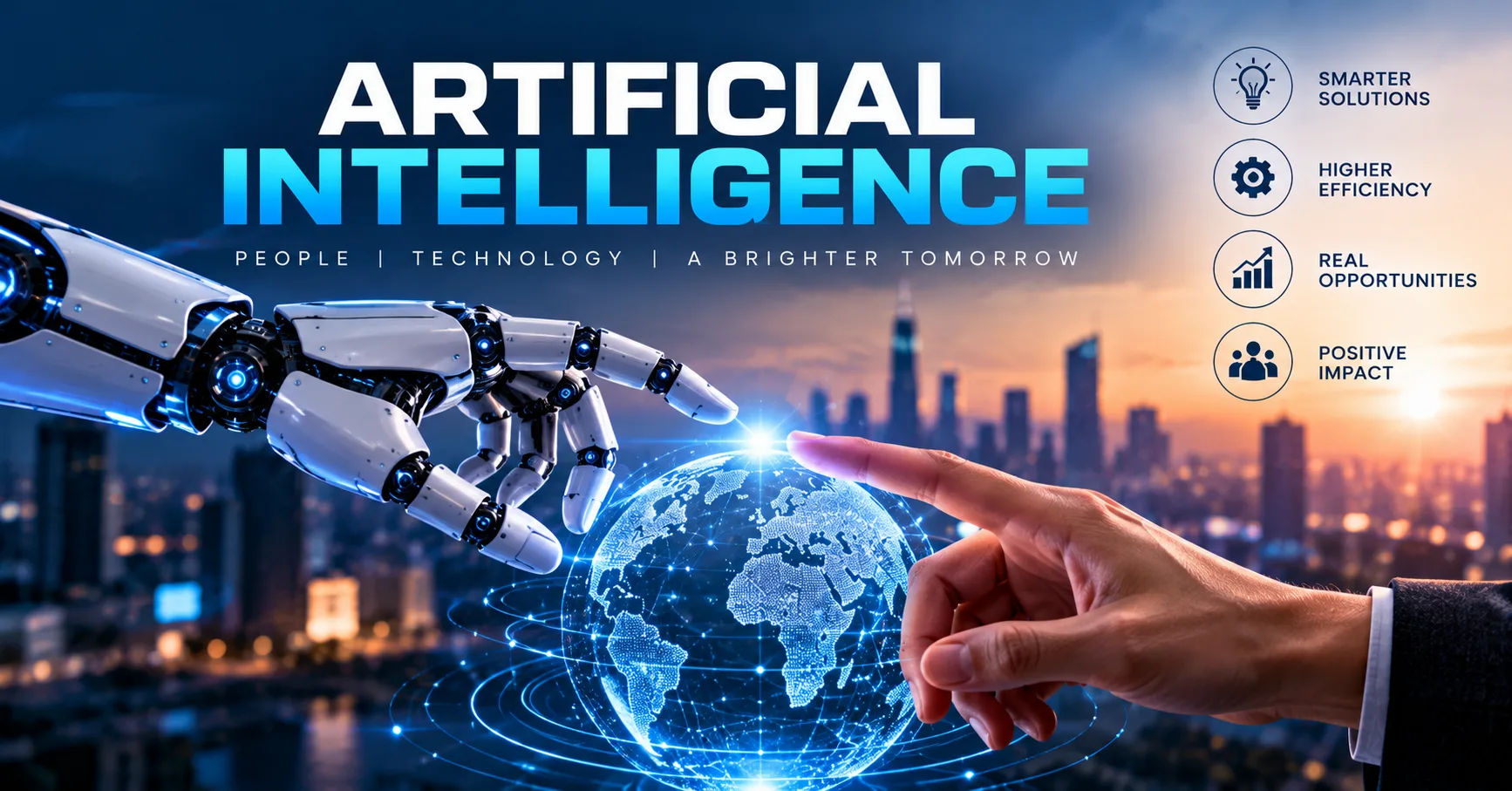 The growing use of ai solutions across industries shows that artificial intelligence is no longer limited to technology companies or research laboratories. It has become a practical tool that supports employees, improves business operations, and helps organizations respond to changing customer needs. Businesses of different sizes can use AI to analyze information, automate repetitive work, identify patterns, and improve communication.
Understanding how AI improves work is important for students, employees, business owners, and professionals. By learning about its applications, benefits, challenges, and future possibilities, readers can better understand how artificial intelligence is shaping the modern workplace and creating new opportunities for growth.
What Are AI Solutions and How Do They Work?
AI solutions are technologies that allow computers and software to perform tasks that traditionally require human intelligence. These tasks may include understanding language, recognizing images, predicting outcomes, solving problems, and identifying patterns in large amounts of data.
AI systems use different methods to process information and produce useful results. Machine learning allows computers to learn patterns from examples, while natural language processing helps software understand and generate human language. Computer vision enables machines to interpret images and videos, and generative AI can create text, images, summaries, and other content.
For example, a company can use AI software to organize customer requests, identify common complaints, and suggest suitable responses. An employee can then review the suggestions and make sure the final answer is accurate.
AI does not always replace human work. In many situations, it supports employees by handling repetitive tasks and providing information that helps them work more effectively.
How AI Improves Work Across Different Industries
Artificial intelligence offers different benefits depending on the needs of an industry. Some businesses use it to improve customer service, while others rely on it to manage equipment, analyze financial information, or support medical professionals.
1. Healthcare: Improving Patient Care and Medical Work
Healthcare is one of the most important areas where AI can support professional work. Doctors, nurses, laboratory technicians, and hospital administrators often handle large amounts of information. AI tools can help organize this information and make certain tasks more efficient.
For example, AI-powered medical imaging systems can help specialists identify patterns in X-rays, CT scans, and other images. These systems can highlight areas that may require closer examination, helping clinicians focus their attention.
AI can also assist with appointment scheduling, patient record management, medical documentation, and administrative communication. By reducing paperwork, healthcare professionals may have more time to spend with patients.
Another useful application is predictive analysis. Hospitals can examine historical information to estimate patient demand, plan staffing, and manage supplies more effectively.
However, medical AI must be used carefully as part of ai solutions across industries. Doctors need to verify important findings, protect patient information, and consider each patient's individual circumstances. AI should support clinical judgment rather than independently replace qualified medical professionals.
2. Education: Making Learning More Effective
Education is changing as schools, colleges, and training organizations adopt AI-powered tools. These technologies can help teachers prepare lessons, organize learning materials, and identify areas where students need additional support.
AI tutoring systems can explain difficult concepts, provide practice questions, and give students immediate feedback. A student who struggles with mathematics, for example, can receive step-by-step explanations and practice similar problems at a comfortable pace.
Teachers can use AI to develop quizzes, summarize educational resources, and create different versions of learning activities. This can save preparation time and help educators adapt materials to different skill levels.
AI can also support accessibility through speech-to-text tools, text-to-speech systems, translation, and caption generation. These features can make learning materials easier to use for students with different needs.
Despite these advantages, students must learn to think independently. AI-generated information can contain mistakes, and excessive dependence on automated answers may weaken problem-solving skills. Teachers should encourage students to check facts, explain their reasoning, and use AI responsibly.
3. Manufacturing: Increasing Productivity and Quality
Manufacturing companies must produce goods efficiently while maintaining consistent quality. AI helps them monitor production processes, detect problems, and reduce avoidable delays.
One important application is predictive maintenance. Traditional maintenance often takes place according to a fixed schedule or after equipment breaks down. AI systems can analyze information from sensors, such as temperature, vibration, and operating speed, to identify signs of possible equipment failure.
When a machine shows unusual patterns, maintenance teams can inspect it before a serious breakdown occurs. This can reduce unexpected downtime and improve production planning.
AI-powered inspection systems can also examine products for visible defects. In suitable settings, cameras and computer vision software can detect scratches, missing components, or irregular shapes more consistently than manual inspection alone.
Manufacturers can further use AI to forecast demand, manage inventory, and improve supply chains. These improvements help organizations use resources more efficiently and deliver products on time.
Human workers remain essential because they oversee equipment, investigate unusual problems, maintain safety standards, and make decisions when production conditions change.
4. Banking and Finance: Supporting Faster Decisions
Banks and financial institutions process thousands or even millions of transactions. AI can help these organizations analyze transactions, identify suspicious activities, and provide faster customer support.
Fraud detection is a major application. AI systems can examine transaction patterns and flag activities that differ from a customer's usual behavior. Financial specialists can investigate these alerts and determine whether further action is necessary.
AI can also help banks automate document processing, answer routine customer questions, and organize financial information. Employees can spend less time searching through records and more time resolving complex cases.
Financial forecasting is another valuable application. Businesses can use AI to analyze historical sales, expenses, and market information to support budgeting and planning. However, forecasts are estimates rather than guarantees, especially when economic conditions change unexpectedly.
Financial organizations must also monitor privacy, security, and fairness. AI decisions that affect loans, credit, or access to financial services should be carefully tested and reviewed to reduce unfair outcomes.
5. Retail and E-Commerce: Improving Customer Experiences
Retail businesses need to understand what customers want, maintain sufficient stock, and provide convenient shopping experiences. AI can help them manage these responsibilities more effectively.
Recommendation systems analyze shopping behavior and product preferences to suggest relevant items. For example, an online store may recommend products related to a customer's previous purchases or current interests.
AI chatbots can answer common questions about delivery, returns, product availability, and order status. Customers can receive assistance outside regular business hours, while support employees can focus on more complicated issues.
Retailers can also use AI to forecast demand and manage inventory. By analyzing historical sales, seasonal trends, and other available information, businesses can estimate which products may sell more quickly.
These capabilities can reduce stock shortages and unnecessary overstocking. However, companies should avoid collecting excessive customer information and should provide ways for people to access human support when automated assistance is insufficient.
6. Transportation and Logistics: Improving Deliveries
Transportation and logistics companies coordinate vehicles, drivers, warehouses, and delivery schedules. AI helps them process information and plan operations more efficiently.
Route optimization systems can consider traffic conditions, delivery locations, vehicle capacity, and time restrictions to suggest suitable routes. Better planning may reduce unnecessary travel, fuel consumption, and delivery delays.
AI can also help logistics businesses estimate delivery times, predict demand, and identify possible disruptions. Warehouse systems may use AI to organize stock movement and support picking and packing activities.
In public transportation, predictive tools can help operators estimate passenger demand and plan services around busy periods.
Safety remains a priority. AI recommendations must account for road conditions, legal requirements, driver fatigue, and unexpected events. Human supervision is particularly important when decisions could affect passengers, workers, or other road users.
7. Marketing and Customer Service: Creating Better Communication
Marketing teams need to understand audiences, communicate clearly, and evaluate campaign performance. AI can support these activities by analyzing customer feedback, organizing information, and helping employees prepare content.
For example, AI tools can summarize survey responses and identify recurring concerns. Marketing professionals can use these findings to improve product descriptions, develop campaign ideas, and make communication more relevant.
Customer service departments can use AI to classify incoming requests, suggest responses, and direct complex questions to the appropriate employee. This can reduce waiting times and help teams manage large volumes of inquiries.
Generative AI can also help draft emails, reports, advertisements, and social media posts. Employees should review all generated material to check accuracy, tone, originality, and suitability for the intended audience.
The greatest benefit comes when AI supports human creativity rather than producing generic content without meaningful review.
8. Human Resources: Simplifying Employee Management
Human resources teams manage recruitment, onboarding, training, employee records, and workplace communication. Many of these activities involve repetitive administrative tasks that AI can help simplify.
AI tools can organize applications, schedule interviews, answer routine employee questions, and recommend relevant training materials. They can also help HR professionals summarize employee feedback and identify common workplace concerns.
For example, an organization may use an AI assistant to answer questions about leave policies or explain the steps involved in onboarding a new employee.
However, recruitment and performance decisions require particular care. Automated systems can reflect biases in historical data, potentially disadvantaging qualified candidates. Employers should regularly evaluate these systems, protect applicant information, and ensure that important employment decisions receive meaningful human review.
AI works best in human resources when it reduces administrative effort while preserving fairness, transparency, and respectful treatment.
The Main Benefits of AI in the Workplace
Although different industries use AI in different ways, several important benefits appear across many professional environments.
Greater Productivity and Time Savings
AI can complete certain repetitive tasks in seconds that might otherwise take employees much longer. Examples include summarizing documents, organizing records, categorizing requests, and preparing initial report drafts.
When employees spend less time on routine work, they can focus on activities that require judgment, creativity, communication, and specialized knowledge.
Better Decision-Making
Businesses often collect more information than employees can easily review manually. AI can identify patterns, compare options, and generate forecasts that help managers understand possible outcomes.
These insights can support planning, but they should be considered alongside professional experience and reliable evidence. Good decisions require more than automated predictions.
Reduced Errors and Improved Consistency
AI can help identify missing information, detect unusual patterns, and apply consistent procedures to repetitive tasks. For example, automated systems may flag incomplete forms or highlight unusual entries in a dataset.
Nevertheless, AI can also make mistakes. Organizations should use appropriate testing, quality checks, and human review, particularly when errors could cause serious consequences.
Improved Customer Satisfaction
Customers often expect quick responses, accurate information, and convenient services. AI-powered support systems can provide answers to routine questions and help organizations respond more quickly.
When implemented properly, these systems can improve service availability without removing access to human assistance.
More Efficient Use of Resources
AI can help organizations estimate demand, schedule staff, monitor equipment, and manage inventory. Better planning can reduce waste and help businesses use their time, money, and materials more effectively.
The actual savings depend on the quality of the system, implementation costs, employee training, and how well the technology fits existing operations.
Challenges Businesses Must Consider
AI offers significant opportunities, but successful implementation requires careful planning. Businesses should understand its limitations before depending on automated systems.
Data Privacy and Security
AI tools may process confidential business information, employee records, or customer details. Organizations need clear policies that explain what information can be shared, where it is stored, and who can access it.
Sensitive information should only be used through systems approved for that purpose.
Accuracy and Reliability
AI systems can generate incorrect answers, misunderstand instructions, or produce misleading predictions. Employees should verify important information rather than accepting every result automatically.
Companies should test systems using realistic examples and monitor performance after deployment.
Employee Training and Job Changes
Some tasks may become automated as AI adoption grows. This can change job responsibilities and increase demand for skills such as data analysis, critical thinking, communication, and technology management.
Employers can help workers adapt through training, clear communication, and opportunities to develop new skills.
Cost and Implementation
AI projects may require software subscriptions, technical support, data preparation, employee training, and system integration. A solution that works well for one organization may not suit another.
Businesses should begin with a clearly defined problem and evaluate whether the expected benefits justify the costs.
Fairness and Accountability
AI systems can produce biased results when their training data or design contains unfair patterns. Organizations should test for these problems and establish clear responsibility for decisions.
Human oversight is especially important when AI affects employment, healthcare, financial access, or other areas with significant consequences.
How Businesses Can Successfully Adopt AI
A practical approach helps organizations gain benefits without introducing unnecessary risks.
Identify a Clear Business Problem
Companies should first identify a task that consumes significant time, creates frequent errors, or causes avoidable delays. Examples include processing invoices, answering common customer questions, or forecasting inventory requirements.
Starting with a specific problem makes it easier to measure whether AI improves performance.
Choose the Right Technology
Not every business needs an advanced or expensive AI platform. Some organizations may benefit from a simple writing assistant, while others need specialized systems that connect with existing software.
Businesses should compare security features, reliability, costs, compatibility, and ease of use before making a decision.
Train Employees Properly
Employees need to understand how to use AI tools, recognize their limitations, and protect confidential information. Training should include practical examples relevant to their daily responsibilities.
Workers should also know when to verify an AI response and when to seek help from a qualified person.
Test Results Before Expanding
Organizations should test AI on a limited scale before using it across the entire business. They can compare processing times, error rates, customer feedback, and operating costs before and after implementation.
If the results are positive, the company can expand gradually while continuing to monitor performance.
Maintain Human Oversight
AI should have clear boundaries. Employees must understand which tasks can be automated, which require approval, and which should remain under direct human control.
Regular reviews help organizations identify problems, update procedures, and ensure that the technology continues to support business goals.
The Future of AI in the Workplace
The future of work will likely involve closer cooperation between people and intelligent software. As AI systems improve, they may become better at coordinating tasks, understanding complex requests, and supporting decisions across different business functions.
AI assistants may help employees manage schedules, prepare reports, summarize meetings, and locate information across approved workplace systems. In manufacturing and logistics, more connected systems could improve planning and coordination. In education, AI may support more flexible learning experiences, while healthcare professionals may gain additional tools for reviewing information and managing administrative duties.
These developments will also increase the importance of human skills. Creativity, empathy, ethical judgment, leadership, and complex problem-solving remain valuable because workplace situations often involve goals and responsibilities that cannot be reduced to simple calculations.
Organizations that invest in employee development, responsible data practices, and thoughtful implementation will be better positioned to benefit from new capabilities.
The future is not simply about using more AI. It is about choosing the right technology for the right task and making sure that people remain informed, capable, and responsible.
Conclusion
Artificial intelligence is transforming the modern workplace by helping organizations improve productivity, manage information, support customers, and make better-informed decisions. From healthcare and education to manufacturing, finance, retail, transportation, marketing, and human resources, AI provides practical tools that can reduce repetitive work and improve the way everyday tasks are completed.
The growing importance of ai solutions across industries demonstrates that this technology has applications far beyond automation alone. It can help doctors review medical images, teachers prepare learning resources, manufacturers identify equipment problems, banks detect suspicious transactions, retailers forecast demand, and logistics companies plan efficient delivery routes. In each case, the greatest value comes from matching the technology to a real need.
However, adopting AI successfully requires more than purchasing software. Businesses must protect sensitive information, check the accuracy of automated results, train employees, evaluate costs, and maintain fair decision-making practices. Human oversight is essential whenever the consequences of an error could affect people's safety, rights, finances, or opportunities.
Employees also have an important role in this changing environment. Learning how to use AI tools responsibly can help them adapt to new workplace expectations, improve their professional skills, and spend more time on meaningful responsibilities. Rather than viewing AI only as a replacement for human effort, workers and employers should explore how technology can complement human knowledge and experience.
For organizations planning to introduce AI, the best starting point is a clear business problem, a suitable tool, and a measurable goal. Small pilot projects can reveal what works, what needs improvement, and whether the investment provides real value. With ongoing evaluation and responsible management, businesses can expand successful applications while limiting unnecessary risks.
Ultimately, AI improves work when it helps people achieve better results without sacrificing accuracy, fairness, security, or quality. The organizations most likely to succeed will be those that combine technological innovation with human judgment, practical training, and a commitment to continuous improvement. By using artificial intelligence thoughtfully, businesses can build more efficient operations, deliver better services, and prepare their employees for the opportunities and challenges of the future.
About the Author